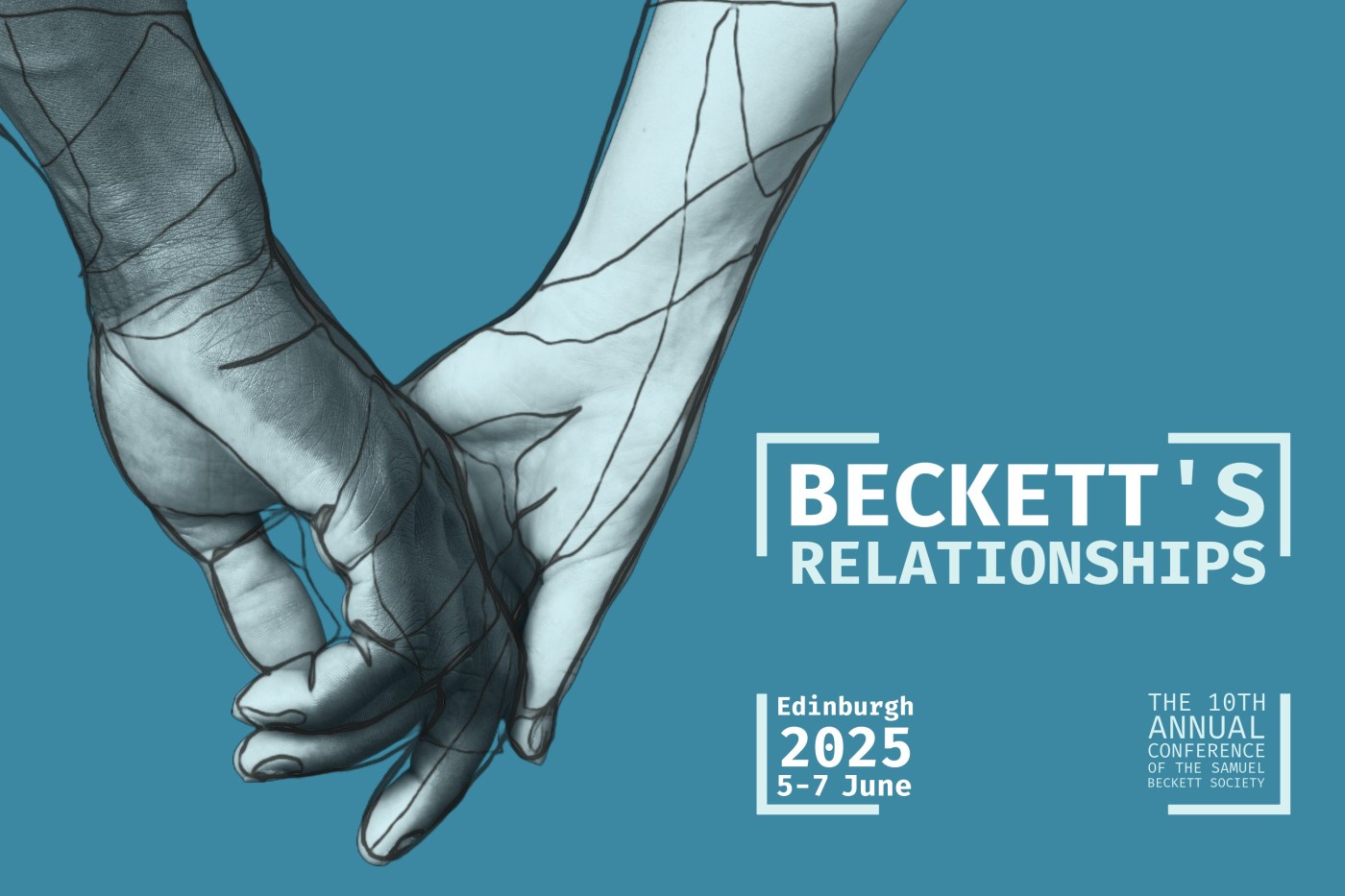
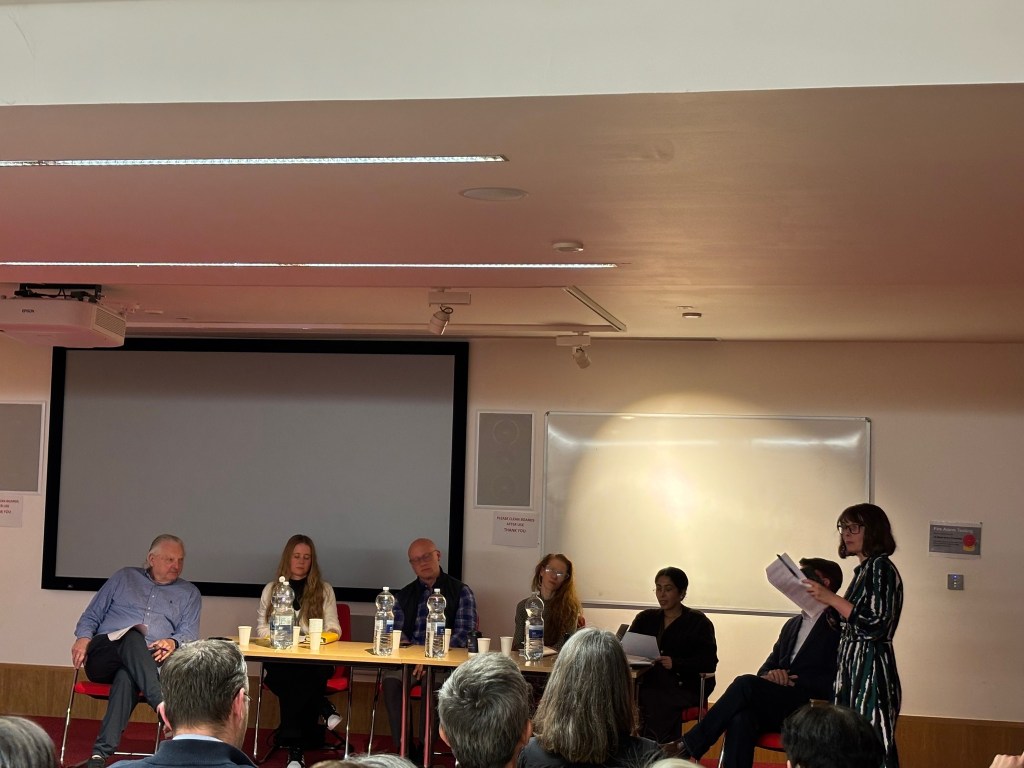
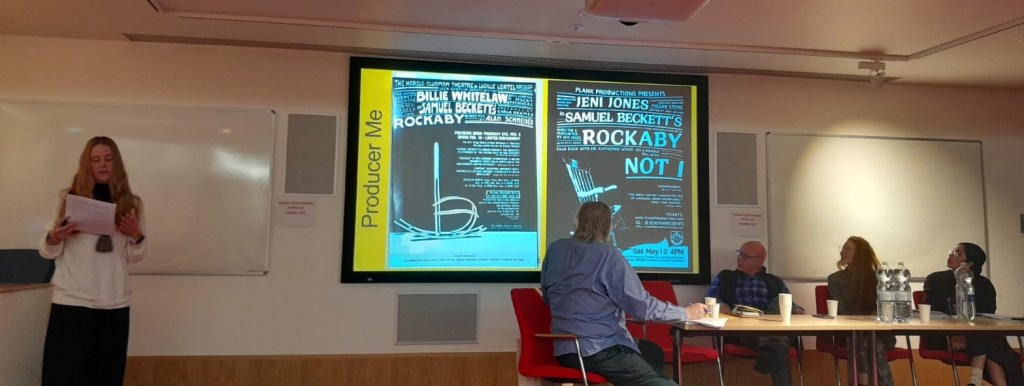
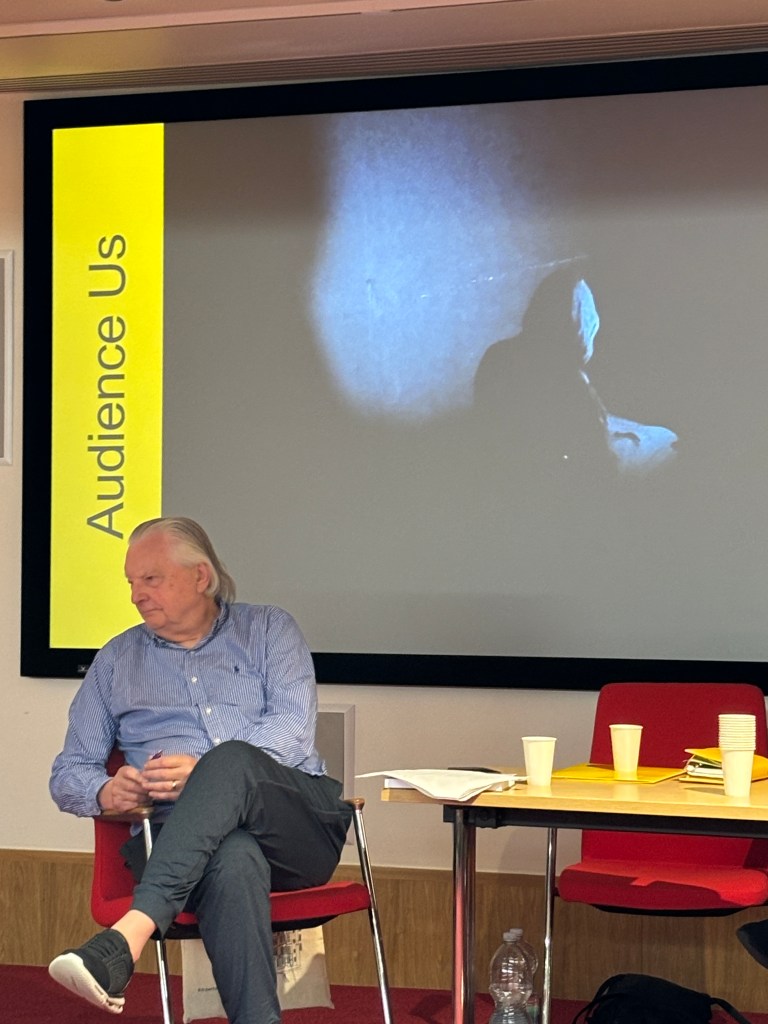
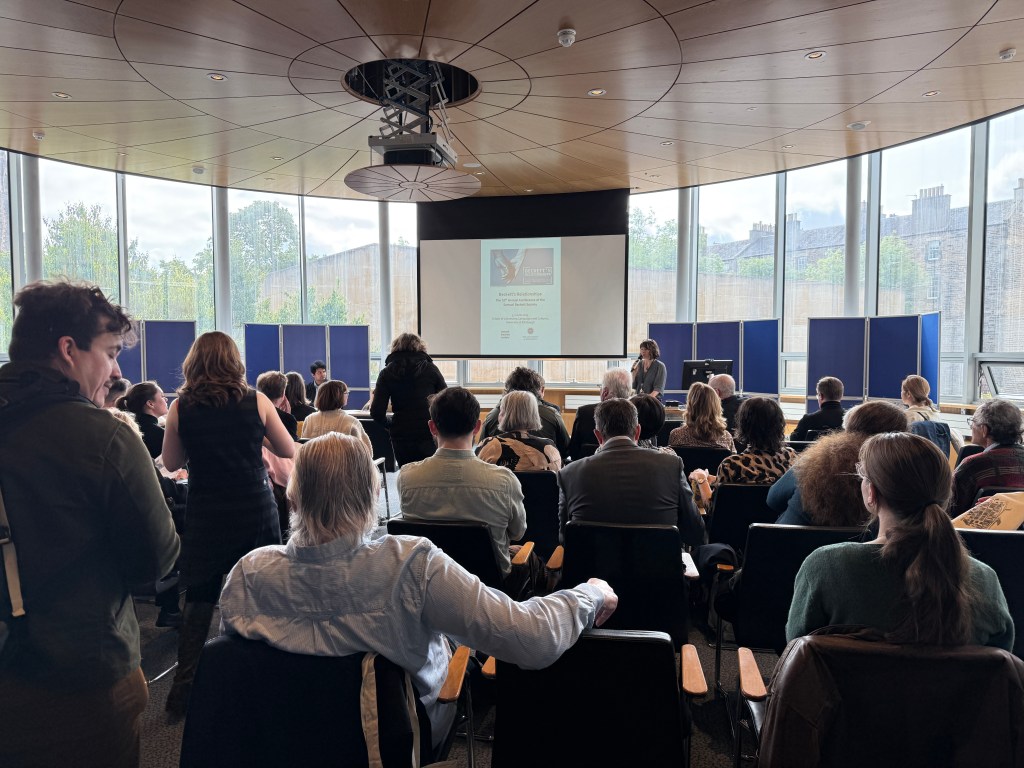
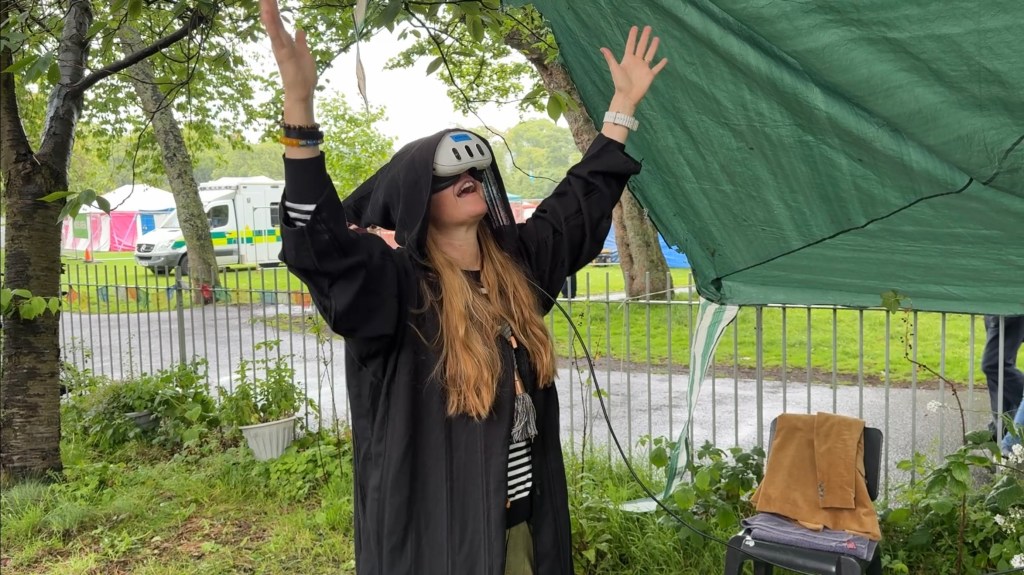
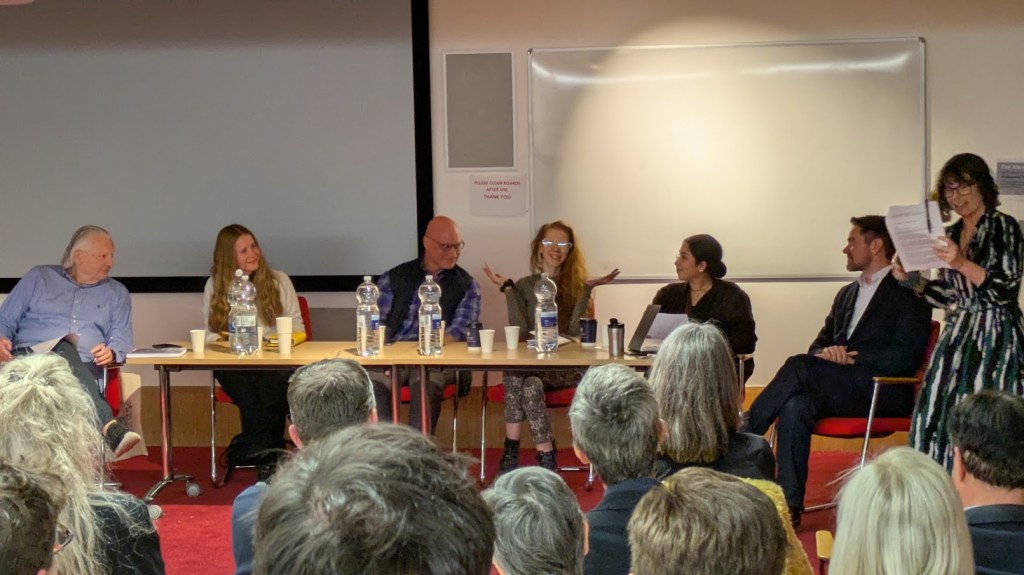
Since its first outing in the heat of Phoenix, Arizona in the Spring of 2015, the Annual Conference of the Samuel Beckett Society has grown in significance to the membership that it now occupies an essential space in which we celebrate and take stock of the variety of work being undertaken in Beckett Studies. This year, the tenth iteration of the conference was hosted at the University of Edinburgh, organised by Hannah Simpson with the assistance of Megan Girdwood and Peter Adkins. Following the founding principles of the initial conference, Beckett’s Relationships emphasised accessibility and diversity attracting many new voices as well as welcoming a strong cohort of established scholars. The programme of academic panels was augmented by a rich menu of events which included a staging of Not I by Californian performer Jeni Jones, a demonstration of a Virtual Reality Playby Nicholas Johnson and Néill O’Dwyer from Trinity College Dublin and a public interview with Francesca Bray, daughter of Barbara, by Pascale Sardin.
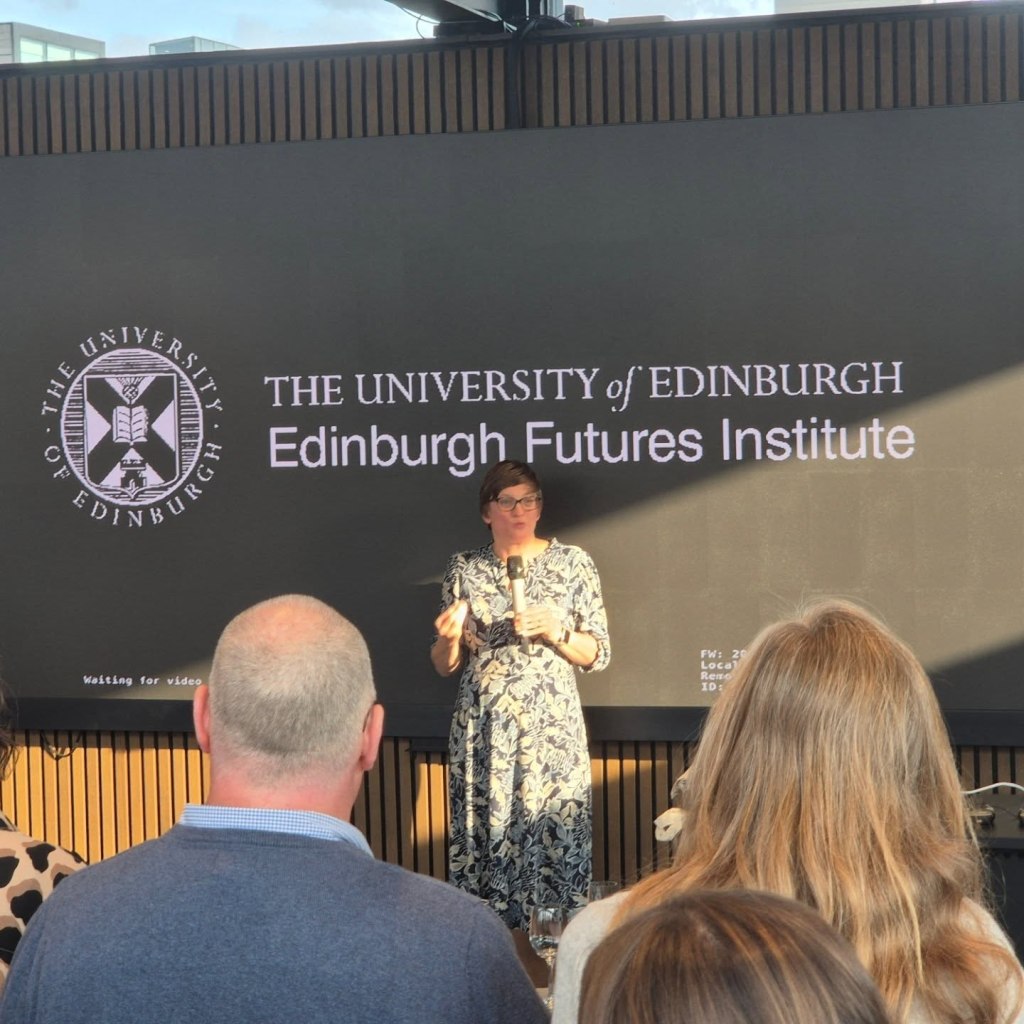
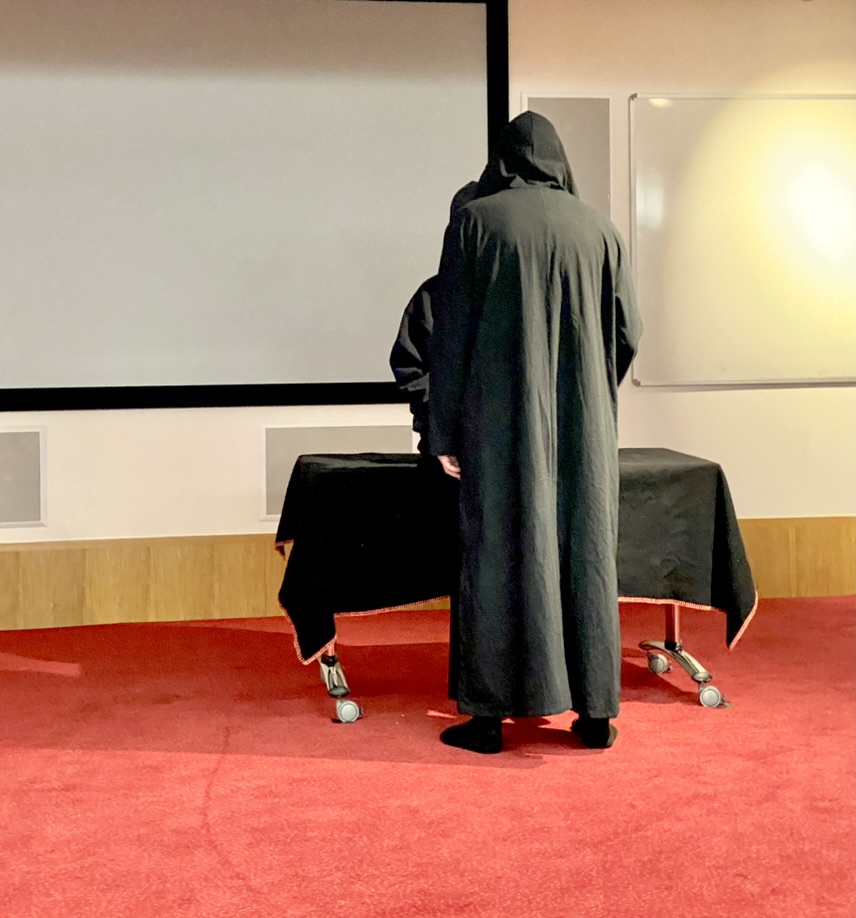
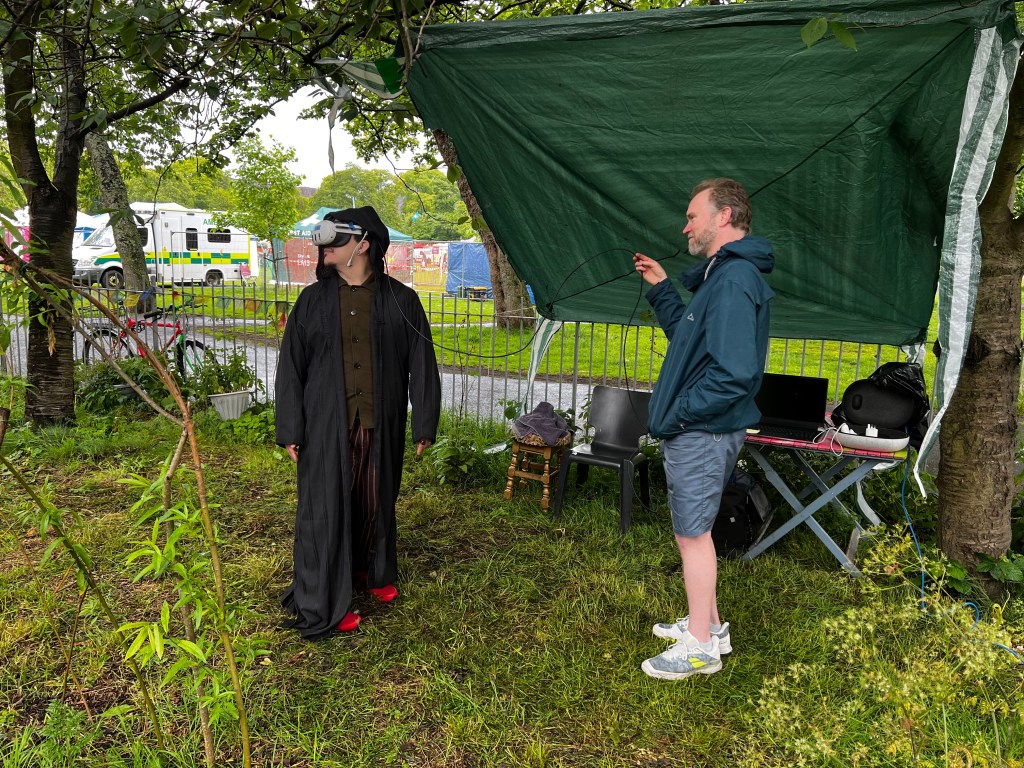
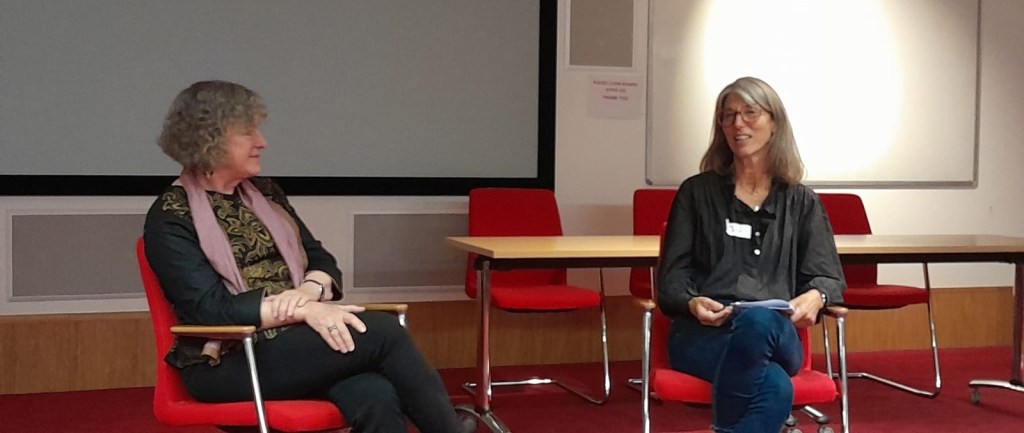
In a personal reflection, Amjad AlShalan offers her own thoughts on the memorable few days in Auld Reekie:
A Space for Resonance
I arrived in Edinburgh with a quiet hesitation. Not because I did not have something to say, but because I was not sure anyone would hear it in the way I hoped. For years, I had lived with Beckett’s manuscripts (his doodles, silences, and marginal marks) long enough for them to feel almost like a private language. But private languages, I have learned, do not always translate well in public spaces. So I chose to speak about something else, about Saudi writers who, like Beckett, write from thresholds: between speech and silence, memory and forgetting, form and disintegration. In crafting my statement, I was not trying to explain Beckett’s influence so much as trace its aftershocks; those quiet echoes that reshape a work without leaving fingerprints.
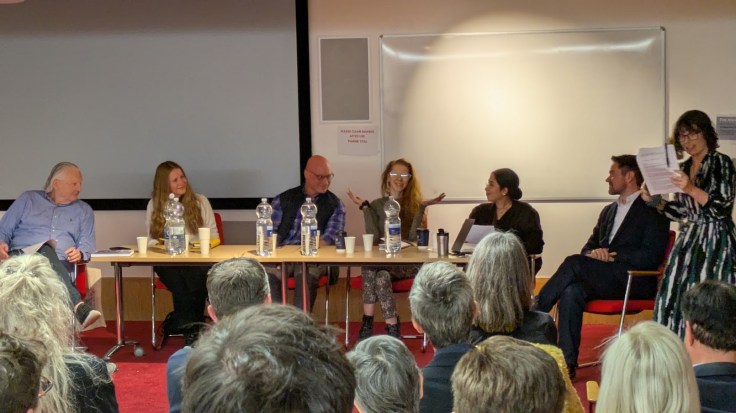
The roundtable I was invited to join was scheduled at the very end of the conference. It might have been easy to feel like a footnote, but instead, I found a kind of stillness there, a clearing in the noise where voices did not compete but reverberated. For the first time in a long time, I was not defending a method, just sharing a way of seeing. It would be remiss not to acknowledge the atmosphere created by Hannah Simpson, Megan Girdwood and Peter Adkins, whose graciousness and clarity of vision shaped the entire event along with the other team members. Their presence reminded me that the Beckettian community is not a fixed space but a constellation that is open to new orbits and new tones. That realization stayed with me. It reminded me that the field is not monolithic and that feeling out of place is not a sign to retreat but a sign that the map is still unfolding.
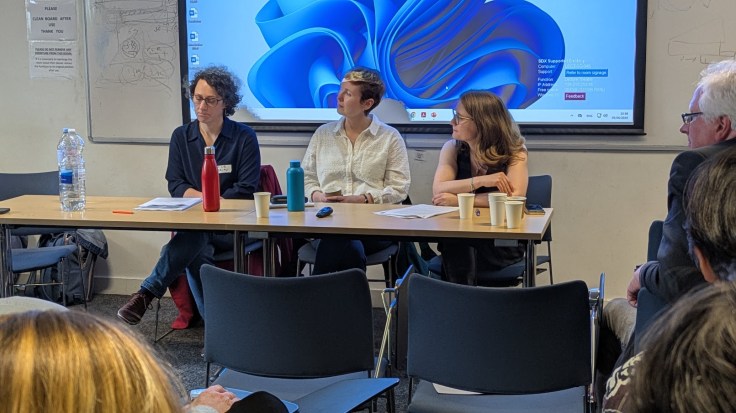
Nowhere was this more apparent than in the panel on Beckett and Suzanne Dumesnil, a session that did not just expand the field but reoriented it. Emilie Morin’s paper traced Dumesnil’s emergence not as a shadow or footnote, but as a writer with stylistic and thematic integrity. Her typescripts are no longer seen as anomalies but as a body of work with quiet urgency. Julie Bates’ reading of ‘F—’ and ‘Contre-Jour’ explored these echoes further: how the writing of Beckett and Dumesnil moved side by side, voicing memory, affection, and solitude in overlapping frequencies. And Dúnlaith Bird’s haunting reading of Musique Jeux and ‘Françoise’ turned the conversation toward presence as erasure, toward the archival ghosts and literary phantoms that structure what we call “Beckett Studies.”
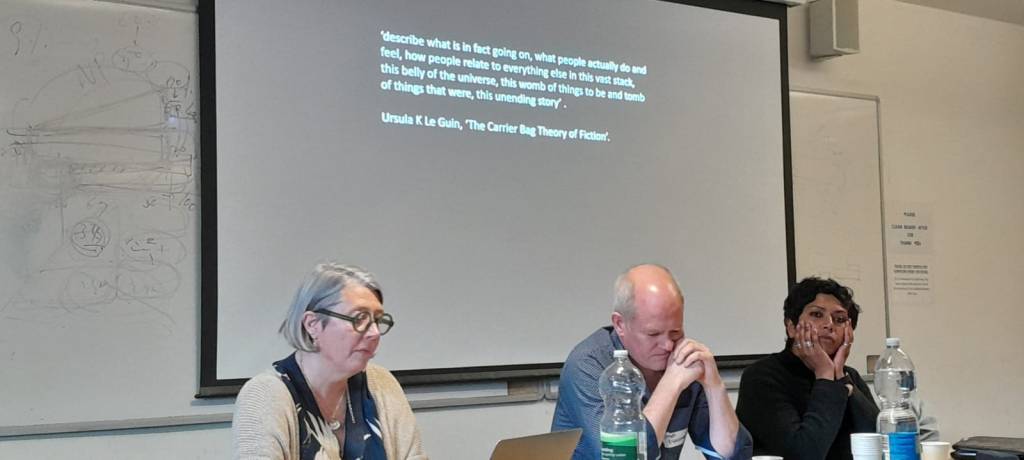
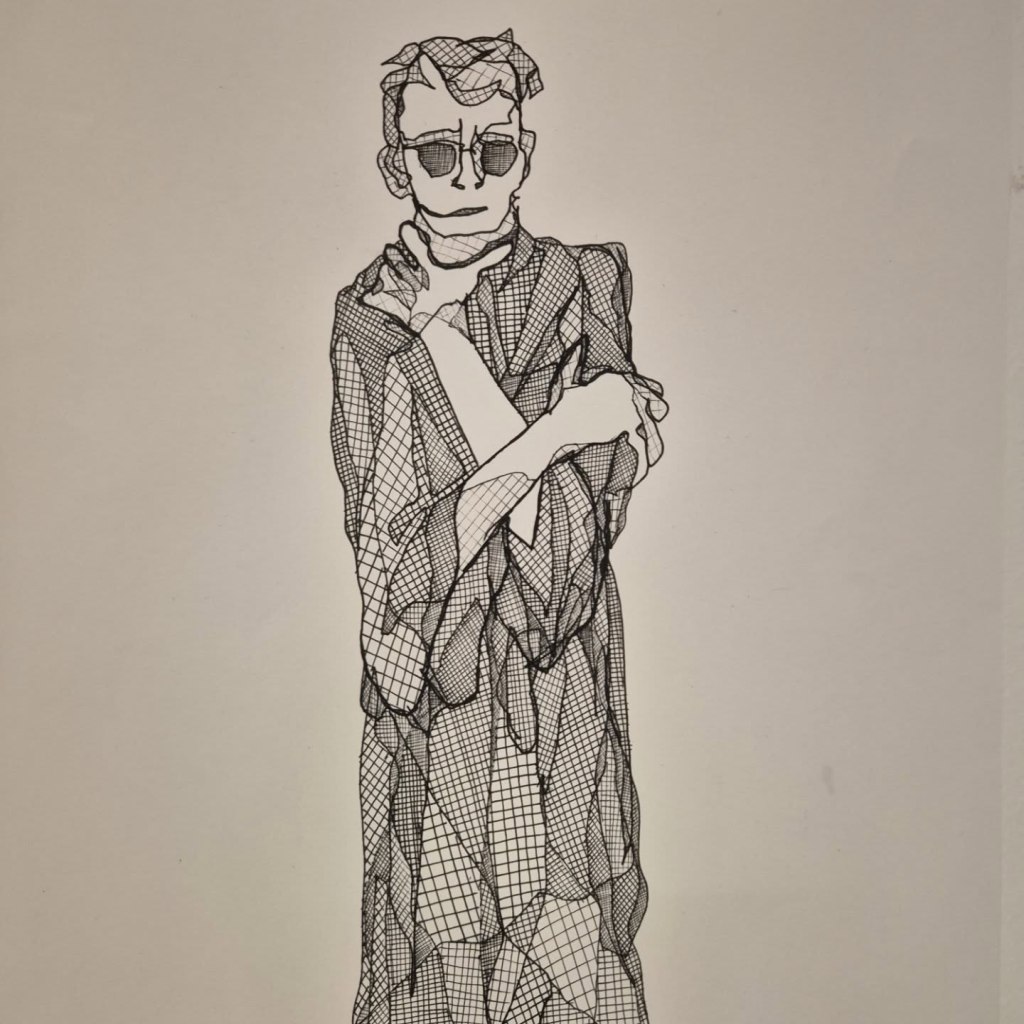
What I did not say, though maybe it was felt, is that my relationship to Beckett began not with his published work, but with the scribbles in the margins of his drafts. My doctoral research followed those marks obsessively, especially in the Murphy Notebooks, where language falters and drawings emerge. That path has not always fit cleanly within the bounds of Beckett studies. And so for a while, I stopped speaking. But this conference offered a different kind of relationship: between scholars, across borders, and across silences. I left reminded that scholarship does not always need to shout. Sometimes it waits. Sometimes it listens. And sometimes, it draws something unexpected in the margin.
 The Beckett Review
Leave a comment