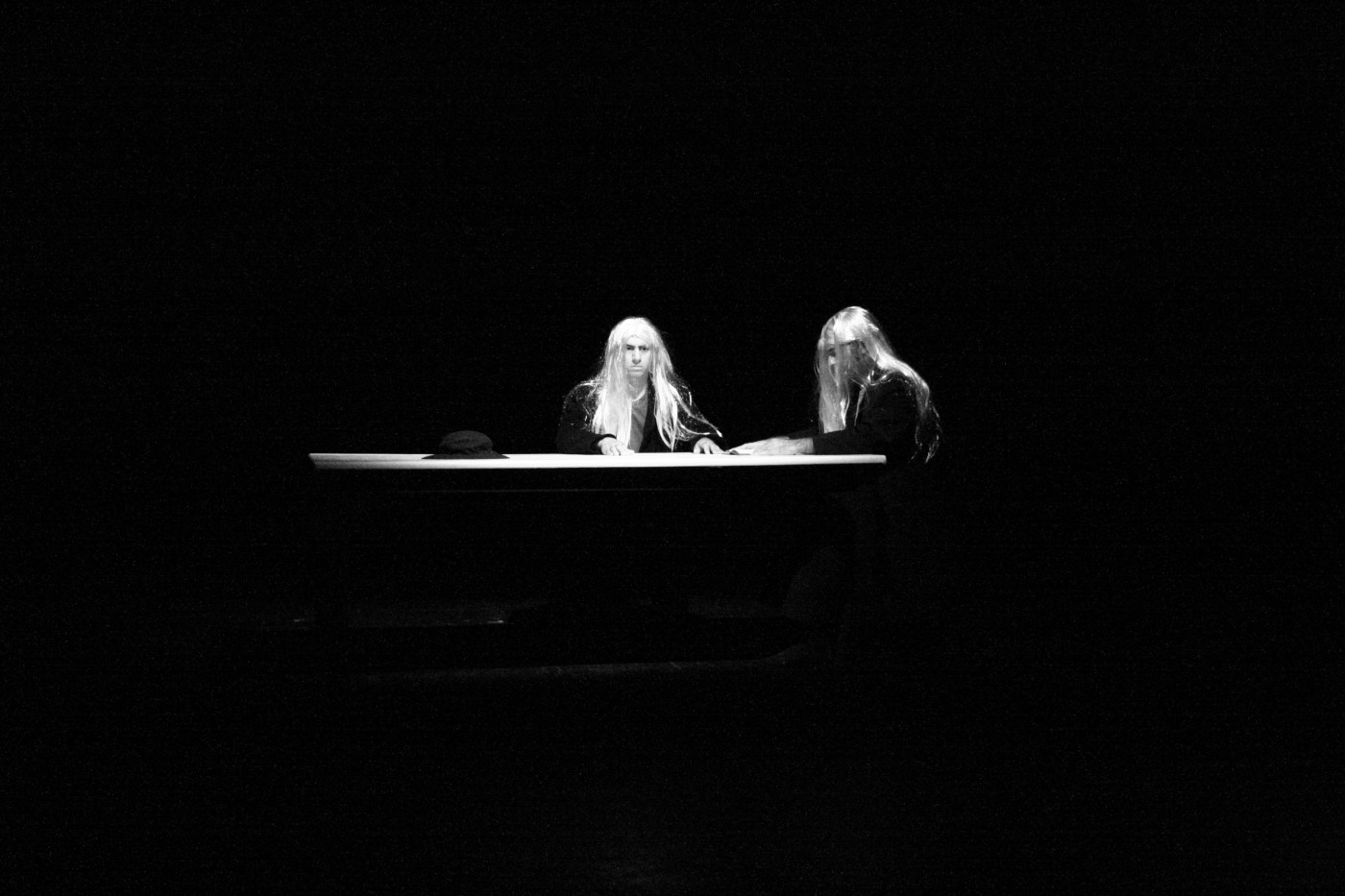
In the second of our programme of publishing peer-reviewed essays by early career researchers, we are delighted to present this work by Ali A. Alizad. This is a deeply personal piece born out of Ali’s experience directing Beckett in his native Teheran. Ali is an Iranian multidisciplinary theatre director, lecturer, and researcher with years of experience in performance practice, acting training, and politically engaged theatre. Born in Iran, he directed acclaimed productions of works by Beckett, Pinter, Genet, and Lorca (2007–2022). Following political repression in Iran, he relocated to Wales in 2023, where he has been a CARA (Council for At-Risk Academics) Research Fellow at the University of South Wales, Cardiff (2023–2025), and continues to direct and facilitate theatre with marginalised communities and students. He is currently a PhD by Portfolio candidate at USW, with research focused on psycho-physical acting, Samuel Beckett, and theatre practice.
Beckett’s Late Drama: The Piece-Theatres of Decay and Possibility of Resistance
We are not saints, but we have kept our appointment: Ontology of Decay
They (Didi and Gogo) are not saints. In a classical sense, they are just two ‘tramps’, a pair like Laurel and Hardy, Chaplin, and Buster Keaton. When I worked on Waiting for Godot (2004), I had no specific perception of the ‘tramp’ in Iranian social life. What I had in my mind was nothing but the same classic image: the Western image of the tramp (Kenner, 1996, Esslin, 2001). I neither saw that in my own production (which at that time was a three-hour performance) nor in the mostly neutered, rewritten, and shortened versions of this great text over the years in Iran.
So, twelve years after Godot, and once again, when I was working on pieces by Samuel Beckett as part of the City Theatre Project in Tehran[1], the image of an Iranian tramp suddenly shaped itself in my mind. Act Without Words II presents two figures exactly like Didi and Gogo. They are forced to follow a kind of routine that is always present in Beckett’s works. They are compelled to carry each other’s body (corpse?) inside a large sack, taking a few steps forward each time and repeating the same process. The question was: who are they? If I were to return to the classic image of the tramp, who would this performance be connected with? An Iranian audience or a Western one? And it was obvious that I was supposed to make this image believable for the audience here and now.
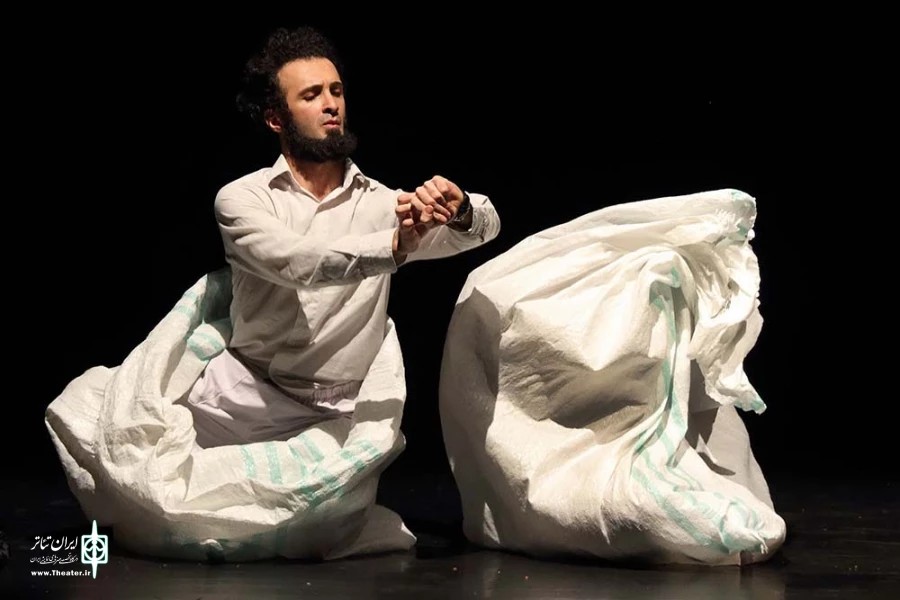
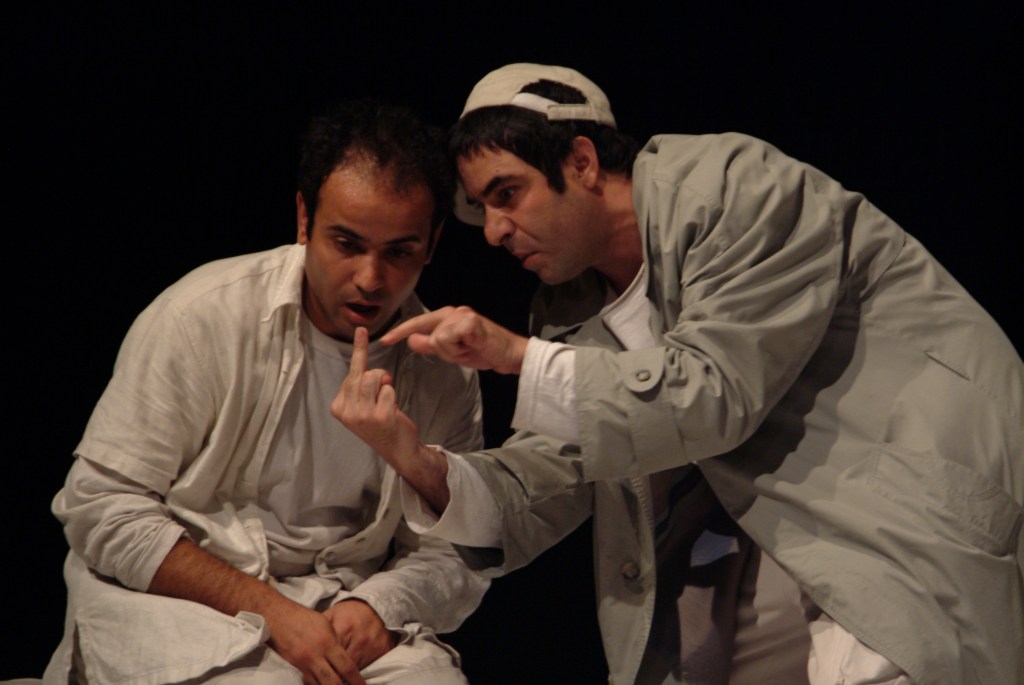
I don’t know how or when this image found an objective pair in the external reality of 2016. That pair could be found everywhere. They lived on the streets of Tehran every day, next to large trash bins, worn-out shoes, torn jeans, filthy bodies, and hungry, examining the trash, with large bags on their shoulders, moving from one trash can to another. This was what I saw as ‘Beckett’s realism’ as defined by Kott and Taborski. Therefore, Act Without Words II became an image of two Iranian homeless people carrying the weight of their destiny.
If Vladimir and Estragon were to appear in Tehran, they would likely be seen in this way: relatively old, dirty, hungry, shelter seekers, and homeless. It is only with this image that we can see Beckett’s realistic routine and, at the same time, the ontology of misery and decay. The ontology often appears when we hear witty, philosophically loaded words from these trash-collecting homeless tramps. The bitter words of Pozzo are uttered most comically, and Vladimir’s most philosophical speeches always fade against his or Estragon’s comic behaviour. Imagine delivering this speech while searching through trash bins:
Vladimir: To all mankind they were addressed, those cries for help still ringing in our ears! …. Let us represent worthily for once the foul brood to which a cruel fate consigned us! (74)
Comedy prevents the situation’s gravity and tragedy from being a one-sided and dominant element. Thus, once again, we must emphasize that they are not ‘saints’ until we reach that moment when the image of the homeless tramp becomes concrete. They are tramps with their feet on the ground who philosophize amidst the trash. They can be homeless people, refugees, or asylum seekers. They represent the surplus of society, a society that ignores them or ultimately equates them with nothing more than garbage. They appear only as shadows, incorporeal voices, or ghosts within reality. For Beckett, it doesn’t matter whether you are a saint or a tramp; the situation is the same for everyone:
Vladimir: Astride of a grave and a difficult birth. Down in the hole, lingeringly, the grave digger puts on the forceps. We have time to grow old. The air is full of our cries. (He listens.) But habit is a great deadener. (84)
Beckett’s ‘courage’ lies in the fact that his heroes are all among the forgotten or the outcasts of society, wandering through the dark night of the soul, they ‘have kept [their] appointment’ not like a saint, but like a tramp. Courage here is to accept the misery and decay of life while waiting until the impossible moment of Godot’s arrival. This is the same courage that Alain Badiou assigned to Beckett when he criticized the dark and despaired stereotypes of ‘nothingness’ in the author’s work.
What Beckett offers to thought through his art, theatre, prose, poetry, cinema, radio, television, and criticism is not this gloomy corporeal immersion into an abandoned existence, into hopeless relinquishment. Neither is it the contrary, as some have tried to argue: farce, derision, a concrete flavour, a ‘thin Rabelais’. Neither existentialism nor modern baroque. The lesson of Beckett is a lesson in measure, exactitude and courage (Badiou, 40).
Little is Left to Tell: From Theatre to Piece-theatre
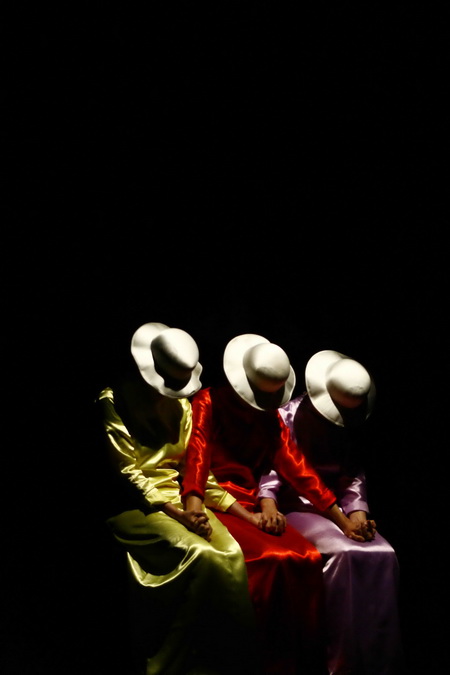
So, Beckett’s drama, particularly his later works, is one of decay, ruins, and fragments of meaning, theatre, and life itself. The bigger images and broad perspectives of Beckett in Godot, Endgame, and Happy Days gradually end in fragmented plays that, at best, manifest the ontology of misery and decay. To portray such decay (the decay of theatre, aesthetics, and life itself), Beckett had no other option but to resort to this ‘theatre of fragmentation’. From Act Without Words I and Act Without Words II in 1956 to Catastrophe and What Where in 1983, we see a process of fragmenting and breaking drama into particles. If we are to trace a logical progression of this abstraction or Beckett’s theatre of decay, we should consider Krapp’s Last Tape (1958) as the beginning and Breath (1969) as its end.[2] Between these two poles, we can place, in no particular order, piece-theatres such as Play (1962), Come and Go (1965), Not I (1972), Footfalls (1975), A Piece of Monologue (1979), Rockaby (1980), Ohio Impromptu (1981), Catastrophe (1982), and What Where (1983).
In this Beckettian trajectory, extreme compression of form (condensation, brevity, austerity, or pureness) is accompanied by extreme compression and inflation of content. Or, in parallel with the fragmentation of form, content also becomes fractured and elusive. The wide-angle lens of the camera moves from a distant view (as in Krapp) to the point where the Beckettian image loses its initial clarity of the whole and reaches fragmented pieces such as the head (as in A Piece of Monologue), the mouth (Not I), and ultimately, Breath. This is a fragmented image in which, if we wish, we can only find pieces of the body/character, speech/silence, meaning/non-meaning, and literature/theatre. The disarray and fusion eventually resemble a kind of artistic deadlock or lack of clarity (both in form and content). It is precisely in this context that Beckett’s fragmented images naturally lead to images of ruins and decay (Rough for theatre I takes place in the ruins), and it is specifically within this deadlock that Beckett’s later drama must be understood. These works, as text, paradoxically find their full realization only in performance, in the presentation of decay as an image. In other words, what we read (or hear) as text finds its wholeness only in the performance of the fragments or, rather, in the presentation of decay. Beckett’s constant emphasis on the precise usage of his stage directions goes beyond mere authorial insistence and points to a formal framework within which the image of decay is constituted (see Gontarski, 1985). In other words, changing Beckett’s frameworks and disregarding the stage directions destroy the form itself.
Above, I referred to the ontology of misery and decay, and once again, I must emphasize my point that this ontology only becomes concrete when we watch the Beckettian shadows/voices/figures/ in their perpetual wandering on stage. Among all these piece-theatres, at least a few texts embody the images of decay and the pairs of body/character, speech/silence, meaning/non-meaning, and literature/theatre more than others: Footfalls, A Piece of Monologue, Not I, Ohio Impromptu, and Play. For example, in Footfalls, ‘May’, a typical Beckettian voice/figure/character speaks with a voice (V), apparently the voice of her mother. However, by the end of this piece-theater, her identity merges with that of the voice, and she refers to herself as ‘Amy.’ The voice speaks from within ‘May,’ and ‘May’ simultaneously changes into the mother/Amy. This creates a fragmented image of the character, or a first-person/third-person narrator within the same voice. May/Amy/Mother/Voice are figures that act in a Bakhtinian way: a kind of polyphony, resulting in the disintegration and fragmentation of the character.
V: I walk here now. (Pause.) Rather I come and stand. (Pause.) At nightfall. (Pause.) She fancies she is alone. (Pause.) See how still she stands, how stark, with her face to the wall. (Pause.) How outwardly unmoved. (Pause.) She has not been out since girlhood. (Pause.) Not out since girlhood. (Pause.) Where is she, it may be asked. (Pause.) In the old home, the same where she – (Pause.) The same where she began. (Pause.) Where it began. (Pause.) It all began. (Pause.) But this, this, when did this begin? (Pause.) When other girls of her age were out at … lacrosse she was already here. (Pause.) At this. (Pause.) The floor here, now bare, once was – (M begins pacing. Steps a little slower.) But let us watch her move, in silence. (401)
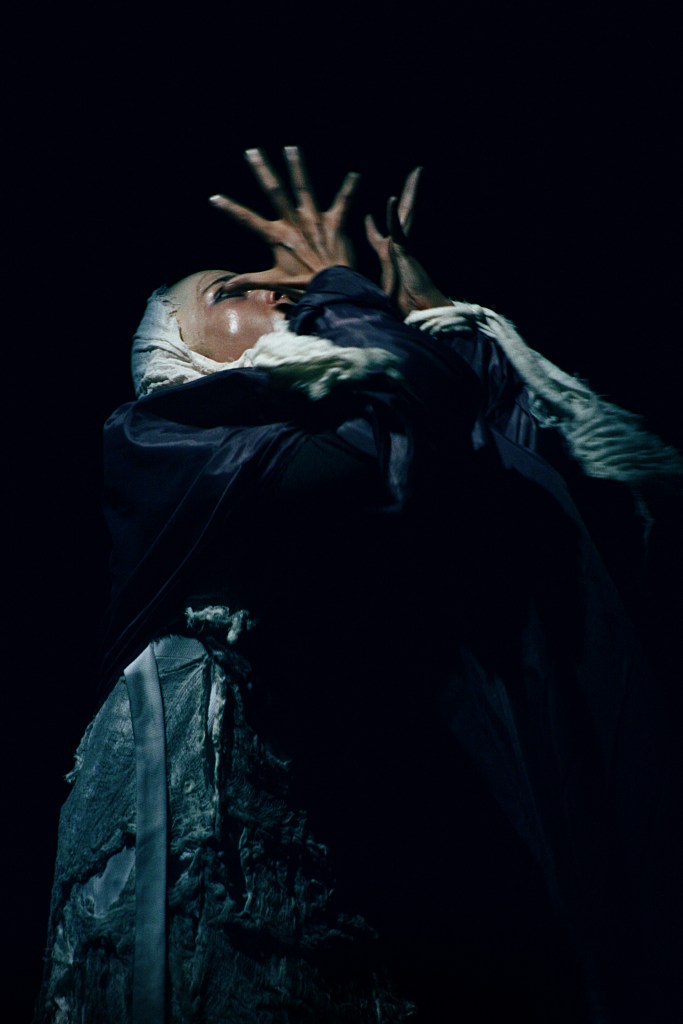
This is why it is no longer possible for us to refer to these voices/figures as characters. They are more like ghosts or voices constantly buzzing (West, 2010). Their wholeness is shattered (much like the fate of the homeless on the streets). One is reminded of Francis Bacon’s paintings: suspended, fragmented, and disintegrated corpses. The complexity of the narrative in this piece of theatre makes it impossible to achieve a sense of wholeness. It not only fragments the character but also our perception of meaning. It is not that meaning fails to constitute; rather, the inflation of meaning reaches an extent that is as if ‘little is left to tell’. We face a mechanism or momentary shift that continually delays any construction of meaning, turning it into neither this nor that, and both this and that. The poles of body/character, speech/silence, literature/theatre, and meaning/non-meaning are constantly at play. Therefore, this very mechanism distinguishes Beckett’s theatre from the theatre of representation and transforms it into the theatre of images and sensory expression.
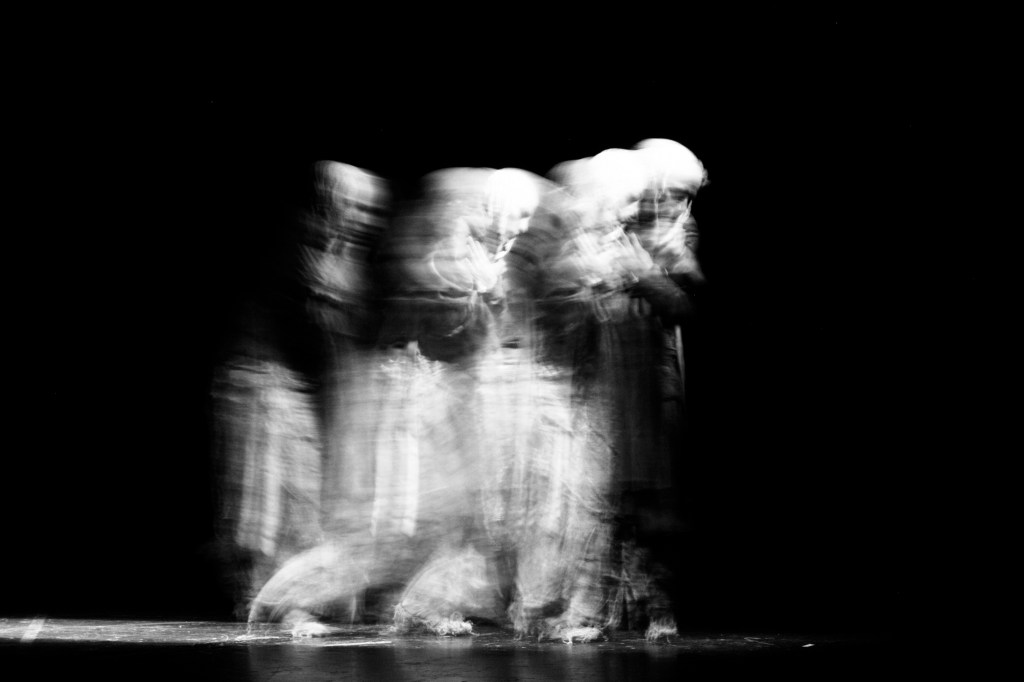
Here, my argument is that, at this point, we can once and for all escape the superficial semiotics of absurdism and meaninglessness in referring to Beckett’s texts. More precisely, Beckett’s aim is not to depict the absurdity and meaninglessness of existence – a usual reductionism about Beckett—but rather to present an existence that stands in the post-Auschwitz world and the ruins of humanity.
One sees little in this light: Theatre of Images and the Austerity of Form
Gradually, in all these piece-theatres, and after the Beckettian explosion of form, some of the most shocking and beautiful images of twentieth century theatre emerge out of the ruins of the stage. These are all images of decay, failure, and the ruins of modernist aesthetics. The issue that consistently appears in Beckett is a refusal to give excessively, to conform, or to deny poverty and decay – poverty and decay that, as I mentioned earlier, equally encompass form and content. Thus, from Krapp’s Last Tape to Breath, the Beckettian project of elimination and formal austerity (the constant rejection of excesses) is pursued relentlessly to its limits. Form becomes increasingly leaner, poorer, severely austere, as Beckett declares in the Three Dialogues with Georges Duthuit that he finds himself merely ‘doing a little better the same old thing, of going a little further along a dreary road’ (103). He asserts ‘among those whom we call great artists, I can think of none whose concern was not predominantly with his expressive possibilities, those of his vehicle, those of humanity’ (120).
In Beckett’s work, these expressive possibilities often manifest in the form of minimalistic play with light, stillness, colour, similarity, and repetition: tools that Beckett used with a kind of rigorous formal austerity. It is quite clear that, rather than expanding the expressive possibilities of theatre, Beckett gradually deprives himself of all these capabilities (particularly the expressiveness of words). As Gontarski writes,
… Beckett reinvented the theatre again, moving it yet further from Ibsen, if not more broadly from humanism itself, as his art moved beyond, even denied, character and plan, mainstays of traditional theatre, and shifted the theatrical (and theoretical) ground from corporeality to the incorporeality of what we call (perhaps too glibly) Beckett’s late theatre, a shift from the body, say, to voice, from materiality to consciousness, from matter to memory…. (2018, 177)
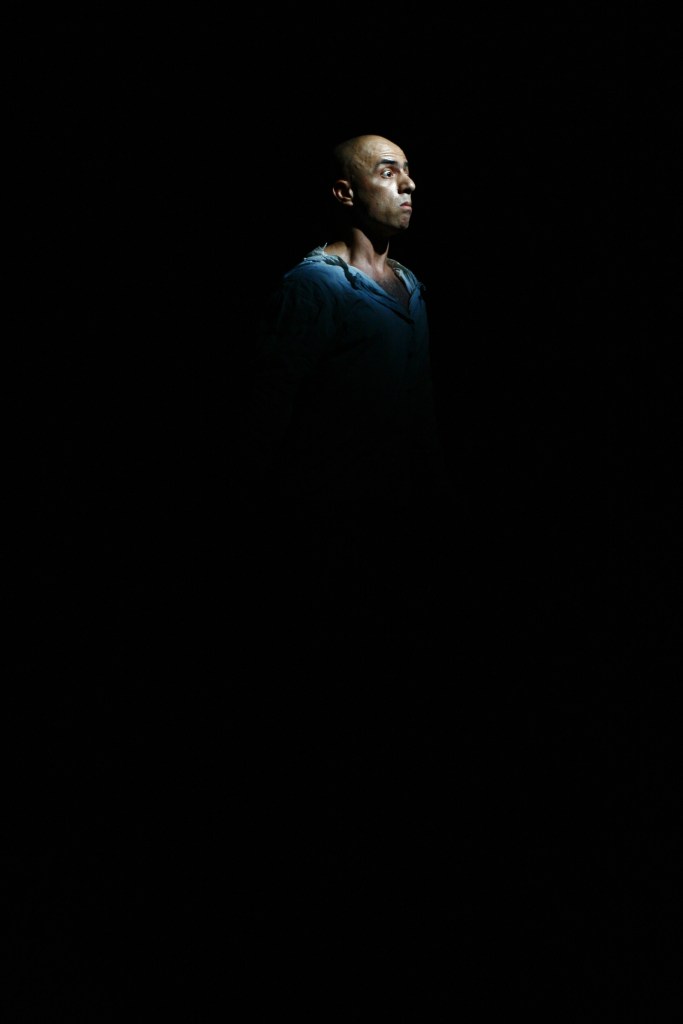
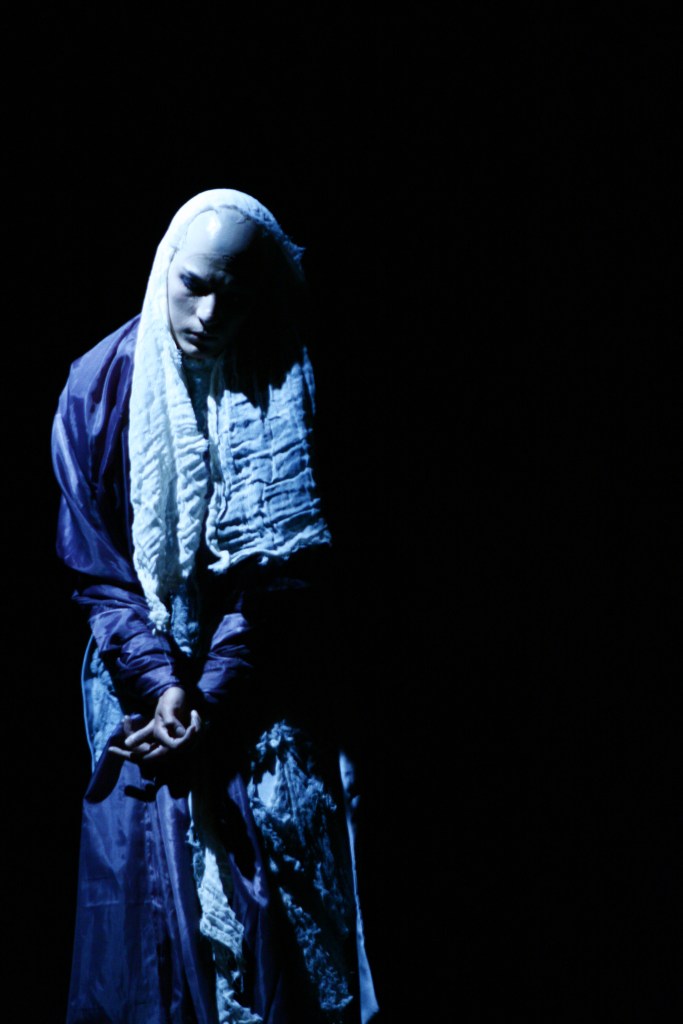
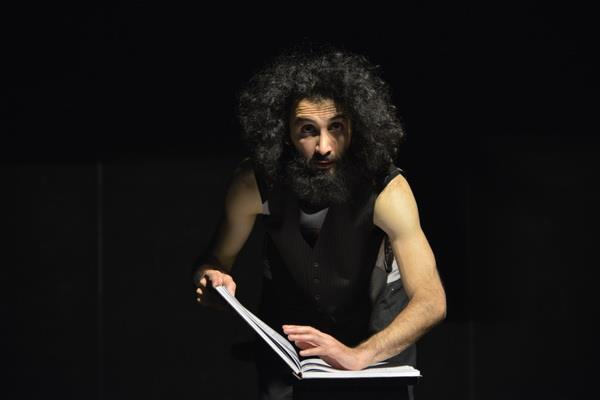
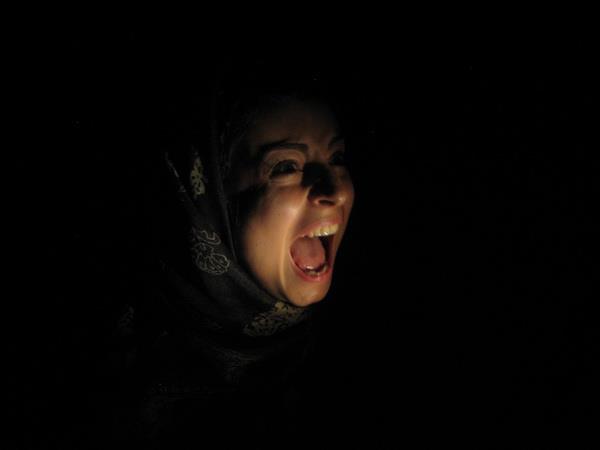
Piece-theatres like Play, A Piece of Monologue, Rockaby, Ohio Impromptu, Not I, Footfalls, and Beckett’s sparsest dramas, Come and Go, and Breath, are all based on the movement/stillness of Beckettian ghosts and the utmost negation. For example, in Footfalls, May is forced to walk for twenty minutes within a narrow strip of light, nine steps long and one meter wide, pausing at specific intervals. This light is often extremely dim and serves to limit the figure’s place of stasis/ movement. Here, we encounter a kind of formal discipline and austerity that works to shape a series of sensory images and moves towards the visual aesthetic of decay. This visual aesthetic differs from that of avant-garde formalist artists like Robert Wilson in the 1970s, who aimed to present purely visual beauty while avoiding interpretation. The formal discipline and austerity of Beckett’s piece-theatres result in a constantly static image on stage, which always appears amid vast darkness and has a visually numbing, hypnotic, and monotonous effect. In Play, three heads emerge from large urns, and light continuously moves over them. In Ohio Impromptu, the listener/reader’s head is positioned in a steady light that falls on the table. In A Piece of Monologue, the light only covers the figure’s head. Finally, in Not I, this lighting configuration is focused solely on the mouth.
The effect of this highly limited and precise lighting configuration is that it draws attention entirely to a kind of play between light and darkness. For this reason, these works should be viewed from a distance. The distance, in addition to its overwhelming visual effect, contributes to the making of one of Beckett’s central themes: being suspended between purgatory and hell. For me, this purgatory is a piece of light in which the Beckettian figure (reluctantly) remains static or in a state of movement and loquacity. Hell is all the darkness that (reluctantly) surrounds us as the audience. As a result, it seems that the audience is always looking from within hell (darkness) at purgatory (the piece of light).
This sensory/visual experience is what, from the 1960s onward, distinguishes Beckett’s theatre from conventional theatre in Europe and America and has a profoundly deep impact on the avant-garde movements in visual arts, specifically video and performance art. However, it is entirely mistaken to think that we are merely dealing with a form of extreme formalism here. The sensory expressiveness of these images offers a unique experience into which the viewer is thrown. These forced gazes into the darkness are what make discussions about meaning irrelevant, opening the doors of sensory perception to their utmost limit. We are dealing with an art form that provides a new kind of aesthetic encounter for the viewer. This is an art that achieves its completeness only through performance on the stage; we see it more than we hear about it. Here, one can clearly sense Beckett’s interest in a painterly form (visual effects). This is evident both in his dialogue with Georges Duthuit and in his own stage imagery, such as in Footfalls or Ohio Impromptu, as well as in Beckett’s frequent personal references to the works of Caravaggio, Caspar David Friedrich, Bram van Velde, Cézanne, and Jack B. Yeats. As James Knowlson tells us:
As a director of his own plays, he would often concentrate, as he put it, on the ‘picture’, working to get the stage image as close as possible to what he had in mind. At the Royal Court Theatre in London in 1976, I watched him adjusting May’s posture in Footfalls for a full half-hour before he was satisfied that he had finally got it right. He also spent a long time checking with the set and costume designer Jocelyn Herbert and the actress Billie Whitelaw that May’s costume was insubstantial enough to echo the ‘tangle of tatters’ referred to in the text. (2003, 43)
In this context, we are faced with a type of ghostly presence for Beckett’s figures (see McMullan, 1993). Beckett’s preference for costumes, their placement on stage, and the emphatic use of colour and light transform them into ghosts/shadows seemingly trapped in a kind of purgatory. This ghostly presence, along with the continuous stillness of the Beckettian figures (and most notably, the formal discipline of the work as embodied in Beckett’s precise stage directions), results in a specific kind of acting that is fundamentally different from traditional and psychological approaches. In conventional theatrical models, the process involves analyzing the characters, understanding their psychology, and then employing a mechanism of empathy with the role. This has been the standard model of traditional acting at least since Stanislavski onwards. In Beckett’s work, due to the rejection of psychology, the elimination of conventional dramatic patterns, and the total focus on static, painterly images, this mechanism becomes entirely ineffective. Instead, the emphasis shifts to gestures, physical states, the smallest bodily movements (e.g., the play of eyes in Happy Days, or the highly intricate timing of footsteps in Footfalls, the repetitive hand movements in Ohio Impromptu), breathing, and the internal/external rhythm of the Beckettian figure.
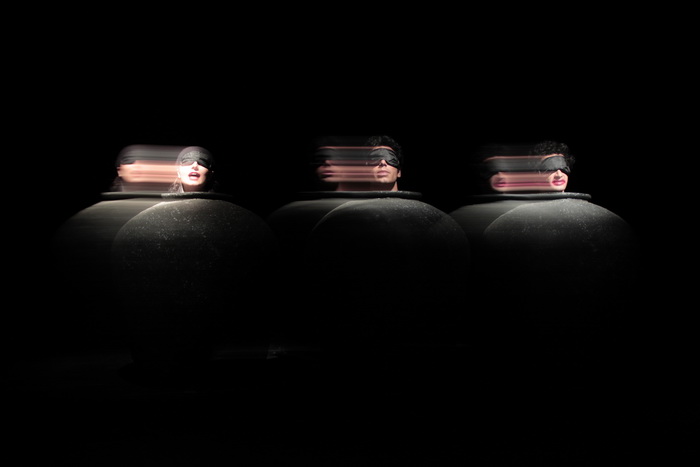
Films and many theatrical and television adaptations of Beckett, such as the compendium Beckett on Film (2002), often appear unsatisfactory, predictable, rigid, and dull due to the use of traditional theatrical acting methods. The paradigm shifts in acting in the twentieth century, from late Stanislavski onwards, and the contemporary theatre’s emphasis on the embodied aspect of acting have equipped modern actors to embody the ‘Beckettian actor’ more effectively than they could over sixty years ago (Zarilli, 2008). The term ‘Beckettian actor’ indicates that only actors with contemporary physical and mental discipline can perform these texts. For example, in Play, the actor must remain inside an urn for twenty minutes with their head held within a fixed beam of light. In Footfalls, ‘May’ must move to the left and right in a narrow strip of light with a specific rhythm and timing (a rhythm that can be considered a form of music in all of Beckett’s works). In A Piece of Monologue, the actor must stand in the light and keep their head within a fixed beam of light for a relatively long period. In Not I, the challenge is even greater, focusing entirely on a mouth illuminated by a fixed light. The same situation is repeated for the figures in Ohio Impromptu and Come and Go. Beckett’s routines compel all these figures to maintain a physically demanding, often extremely strenuous, fixed bodily posture in a rigorously disciplined manner.
Billy Whitelaw, Beckett’s favoured actress, speaks of an inexpressible emotional state, ‘sensory deprivation,’ which appears to be a defining feature of the acting in these short plays (Knowlson, 2006). This emotional state results from severe physical ‘torture’, the musicality of words, and the confinement within the light and darkness. My actors, Khosrow Mahmoodi (in Catastrophe and Ohio Impromptu), Alireza Keymanesh (in Krapp), and Morteza Hoseinzadeh (in Play)[3] have all described similar experiences. I would consider this equivalent to a form of ‘psychophysical experience’ that is now reflected in painterly imagery and the focus on the embodied aspect of acting in the work of most contemporary directors.
Beckett, somewhere, speaks of the impossible desire to remove the actor, a desire that is ultimately realized with the writing of Breath (a piece-theatre without an actor!) shifting ‘from corporeality to the incorporeality’. Before this, Beckett had pursued this goal repeatedly by fragmenting his figures in a Baconian manner.
There’s our catastrophe. In the bag: The Aesthetics of Ruins and the Possibility of Resistance
Breath, this most extreme of Beckett’s piece-theatres, where neither the usual Beckett figure is present nor the constant buzzing of voices in the head, represents an endgame in the aesthetics of ruin and the borders of silence.
- Faint light on stage littered with miscellaneous rubbish. Hold about five seconds.
- Faint brief cry and immediately inspiration and slow increase of light together reaching maximum together in about ten seconds. Silence and hold about five seconds.
- Expiration and slow decrease of light together reaching minimum together (light as in 1) in about ten seconds and immediately cry as before. Silence, and hold about five seconds. (371)
Both in this piece-theatre and Endgame, the signs of decay become theatrical. Clov in Endgame:
Finished, it’s finished, nearly finished, it must be nearly finished. (Pause.) Grain upon grain, one by one, and one day, suddenly, there’s a heap, a little heap, the impossible heap. (Pause.) I can’t be punished any more. (Pause.) I’ll go now to my kitchen, ten feet by ten feet by ten feet, and wait for him to whistle me. (93)
The indeterminate catastrophe of the world in Endgame reflects the same indeterminate aspect of decay and the catastrophe in Breath, or, as Clov later responds to Hamm’s question, ‘What’s happening, what’s happening?’— there is always ‘something [that is] taking its course’. We can call this the process of ageing, dying, mental/physical breakdown, the tedium of existence, and collapse. Alongside these Beckettian themes of decay, the aesthetics of decay gradually become more and more complete. In Happy Days, decay is shown through Winnie’s gradual sinking into the ground. In Play, the heads only stick out of the urns enough to be seen. The three seem to be gradually sinking into the urns (or maybe hell?). ‘May’, in Footfalls, throughout the three parts of the play, with her threadbare and tattered clothing, appears increasingly like a ghost, slowly fading away and collapsing. (In the third section, the stage directions tell us that the light is at its minimum.) Krapp and the two ghosts of Ohio Impromptu, by the narrative that the tape recorder and the reading provide, are immobilized figures with minimal capability. They, too, like other Beckettian ghosts, are stuck somewhere.
These ghosts, often old and withered, sometimes ageless (in Rockaby, the woman resembles Lucky with premature ageing), are the remnants of character, the remnants of drama and theatre. To all these signs of ruin and decay, one can add Hamm’s physical disability, Krapp’s visual impairment, Winnie’s mental/physical obsession, May’s mental disorder and so on. Old age has allowed Beckett to depict both external and internal decay and ruin. While old age and its associated frailties are an ideal subject for portraying decay and ruin, they also serve the comic motifs that are always present in Beckett’s work. The comedy of Winnie in Happy Days, the comedy of Hamm/Clov/Nagg/Nell in Endgame, the comedy of Pozzo/Lucky, and the physical frailties of the old women in Come and Go, as well as Krapp’s constant banana-eating, are examples of Beckett’s perpetual interest in presenting this comic aspect. Here, the comedy of old age is not meant to alleviate pain but rather to achieve ‘into [a] dream of an art unresentful of its insuperable indigence’ (Beckett, 1958). In Beckett’s world, tragedy exists, but only through the negation of tragedy, through the farce of old age and decay, and even more, through the negation of playing the victim.
Within the confines of performing this poverty and decay in Beckett’s works, a certain aesthetic possibility, a possibility of speaking on the unspeakable (the possibility of silence), or the possibility of resistance, is revealed. According to Knowlson, Beckett had clear political interests, and in his friendly discussions, he was keen on the issues of Eastern Europe and left-wing politics (2003). Aside from this, he, as a former member of the Resistance, had firsthand experience with death and hunger, and later, with Auschwitz and Eastern European totalitarianism in the 1960s.
The Beckettian signs of decay (the aesthetics of decay) are simultaneously signs of non-ideological politics: Didi and Gogo are hungry. (Estragon fiddles with boots that are remnants of war). Much like Hamm and Clov, and later Winnie and Willie, they stand in the post-Auschwitz worlds (the ruins of the world). Today, Endgame could be interpreted based on the destructive policies that have led to ecological destruction (as Krapp puts it, this ‘this old muckball’). Clov tells us that ‘There’s no more nature.’ May’s physical/mental disintegration in Footfalls, with her grey hair (again, premature ageing) and clothes that resemble ‘a tangle of tatters,’ could cautiously reflect the most tangible image of post-Auschwitz worlds such as the massacres of Rwanda and Bosnia, and even more, the manipulations of humans’ minds by artificial intelligence. The lack of explicit meaning, or rather the disintegration of meaning into fragmented theatrical pieces, is what makes politics in Beckett non-ideological and speaks of the possibility of a certain kind of resistance. This possibility of expressing the inexpressible, the possibility of resistance, is best exemplified in Catastrophe (and alos, in a different way, in What Where), Beckett’s last piece-theatre (and his most political one). The play, dedicated to Václav Havel (who at the time of writing was imprisoned by the Communist government of Czechoslovakia), largely concerns the manipulation and torture of the body: the body of the protagonist. At the end of the play, after all the pressures and torture exerted on the protagonist’s body, according to the stage directions, and despite the director’s wishes, he raises his head:
A: What if he were to . . . were to . . . raise his head . . . an instant . . . show his face . . . just an instant.
D: For God’s sake! What next? Raise his head? Where do you think we are? In Patagonia? Raise his head? For God’s sake! [Pause.] Good. There’s our catastrophe. In the bag. Once more and I’m off.
A: [To L.] Once more and he’s off. [Fade-up of light on P’s body. Pause. Fade-up of general light.]
D: Stop! [Pause.] Now . . . let ’em have it. [Fade-out of general light. Pause. Fade-out of light on body. Light on bead alone. Long pause.] Terrific! He’ll have them on their feet. I can hear it from here. [Pause. Distant storm of applause. P raises his head, fixes the audience. The applause falters, dies. Long pause. Fade-out of light on face.] (460-1)
If aesthetics is needed to depict failure, decay, poverty, silence, and the negation of any possibility of expression, then it creates, to the fullest extent, a ‘space’ for politics and the possibility of resistance, as Adorno tells us, ‘the name of disaster can only be spoken silently’ (130). From this place, Beckett’s dramas are not pessimistic, absurd, dark, nihilistic, or hopeless, but rather a visual grammar and a warning of the impossibility of salvation.
Hellish half-light: Toward the Affirmation of Evil
Terry Eagleton writes:
Clinging to the possibility of redemption has at least this benefit, that it allows us to measure how dismally far short of it we fall. Beckett has sometimes been accused of nihilism; but if there were no sense of value in his universe, there would be no cause for so much shrieking and howling. Without some sense of value, we would not even be able to identify our suffering as objectionable, and so would fail to recognize our plight as anything but normal. It is just that such value cannot be spoken outright for fear of its being ideologized, inflated to some sentimental humanism and so becoming part of the problem rather than the solution. Instead, value must manifest itself negatively, in the unswerving lucidity with which this writing confronts the unspeakable (2006).
Nihilism and absurdism are meaningless, overused, outdated, overly academic, and banal terms about Beckett’s work. Madness and all the endless mutterings of Beckett’s figures are not about how absurd and meaningless the world is, and so we are doomed to inactivity and passivity as the inevitable result. Rather, they are concerned with how evil can taint the world, resulting in disaster. In Beckett’s work, evil is emphatically present. This is the same evil that, in an entirely incomprehensible way, contaminates the mysterious worlds of Kafka, Dostoevsky, and before them, Shakespeare and the Greek tragedies.
In Kafka, Beckett, and Shakespeare, the world outside is often constituted like a theatrical stage. Everything is prepared before; it is only the actors who must step in one by one to play their predetermined roles. The best example of this arcane prearranged stage can be found in Kafka’s great masterpieces, The Castle (1926), The Trial (1925), and in his extremely concise and beautiful works Before the Law (1915) and A Hunger Artist (1922). The prearranged stage is equivalent to the full-blown spectacle that Kafka shows in his works. Here, we face a kind of pessimism that connects us directly to Beckett’s dead worlds. Once again, the stage is set for the performance (Catastrophe, Endgame, Play). This kind of prearranged performance is also abundantly seen in Pinter’s The Birthday Party (1958), Słavomira Mrożek’s Tango (1964), and Sarah Kane’s Cleansed (1998). Thus, Beckett’s works are as much about value (as Eagleton puts it) as they are about the priority of evil. Much like Shakespeare, the pessimism of Beckett’s figures (such as Hamm) is more like the pessimism of Lear and Macbeth than the pessimism and passivity of Camus’s hero in L’Étranger (1942). And just like Kafka, Beckett’s comedy is a kind of comedy seen in the ridiculous death of the hero in A Hunger Artist before the gaze of others.
Today, whatever Beckett means for us, it is certainly not how bleak, hollow, and dark the world is. The notion that everything is meaningless paradoxically leads either to sentimental philosophical despair, as with Camus’s Meursault, or even worse, to a kind of opportunistic liberalism and a philosophy of the moment. Today, Beckett must show us, at the present, how it is possible to wait and take no action (Waiting for Godot) and how it is possible to be forever trapped and wail in the destruction of ‘nature’ (Endgame); how one might have no memory and merely find solace in virtual (Krapp’s Last Tape); how one can engage in a game and be entertained (Play/What Where). Nihilism and absurdism, regarding Kafka and Beckett, do not fully capture the truth of their works. Both reveal the ridiculousness and, at the same time, the evil of the situation. They simply show it and nothing more. The heroes of Kafka and Beckett are aware, with Socratic irony, of the evil they are trapped in. They have at least grasped the source of that ‘Hellish half-light’. And Kafka’s unfinished dramas are closer to Beckett’s unfinished plays. In both, the game continues endlessly. And in Beckett, for the audience and the players of the evil show. Beckett is a Kafka with the bitter taste of Shakespeare; a Kafka who is ascetic, a Kafka who has lived through Auschwitz.
Beckett’s works are not modernist manifestos about the absurdity of existence and life, unlike most of Ionesco, Arrabal, and Camus’s works, which largely and straightforwardly speak about the dark existential conditions and the absurdity of language and human relationships. These works are deeply realistic ideas about a sense of decayed humanity made by a compassionate eye; ideas about resistance until the very end of the ‘appointment’, and also, on an aesthetics of ugliness.
Works Cited
Adorno, Theodor W (1982), ‘Trying to Understand Endgame’, trans Michael T. Jones, New German Critique 26: Critical Theory and Modernity (Spring-Summer), 119-150.
Beckett, Samuel (1986), The Complete Dramatic Works, London: Faber and Faber.
Beckett, Samuel (1965), Proust and Three Dialogues with Georges Duthuit, London: Calder and Boyars.
Badiou, Alain (2002), On Beckett. Manchester: Clinamen Press.
Eagleton, Terry (2006), ‘Political Beckett?’, New Left Review, 40 (July-August), online.
Esslin, M. (2001), The Theatre of the Absurd (New edition), London: Methuen Drama.
Gontarski, S. E. (1985), The Intent of Undoing in Samuel Beckett’s Dramatic Texts, Bloomington, IN: Indiana University Press.
Gontarski, S. E. (2018), Beckett Matters: Essays on Beckett’s Late Modernism, Edinburgh: Edinburgh University Press.
Kenner, Hugh (1996), A Reader’s Guide to Samuel Beckett, Syracuse, NY: Syracuse University Press.
Knowlson, James, & Haynes, John (2003), Images of Beckett, Cambridge: Cambridge University Press.
Knowlson, James, & Knowlson, Elizabeth (2006), Beckett Remembering, Remembering Beckett: A Centenary Celebration, London: Bloomsbury.
Kott, Jan (1966), ‘Beckett’s Realism’, trans. Boleslaw Taborski, The Tulane Drama Review, 10:3 (Spring), 156-159.
McMullan, Anna (1993), Theatre on Trial: Samuel Beckett’s Later Drama, London: Routledge.
West, Sara (2010), Say It: The Performative Voice in the Dramatic Works of Samuel Beckett, Amsterdam: Editions Rodopi B.V.
Zarrilli, Phillip (2008), Psychophysical Acting: An Intercultural Approach after Stanislavski, London: Routledge.
[1] I produced three short plays by Beckett, including Krapp’s Last Tape, Play, and Come and Go, with my own translations.
[2] Here, I have set aside the chronological order of the pieces. Then, in accordance with the conceptual framework of this article, my focus has been on a movement from the body as a whole to the head, the mouth, and ultimately the breath.
[3] These plays were performed at different times between 2007 and 2016 in Tehran as part of my theatrical project on Beckett’s late drama.


Leave a Reply