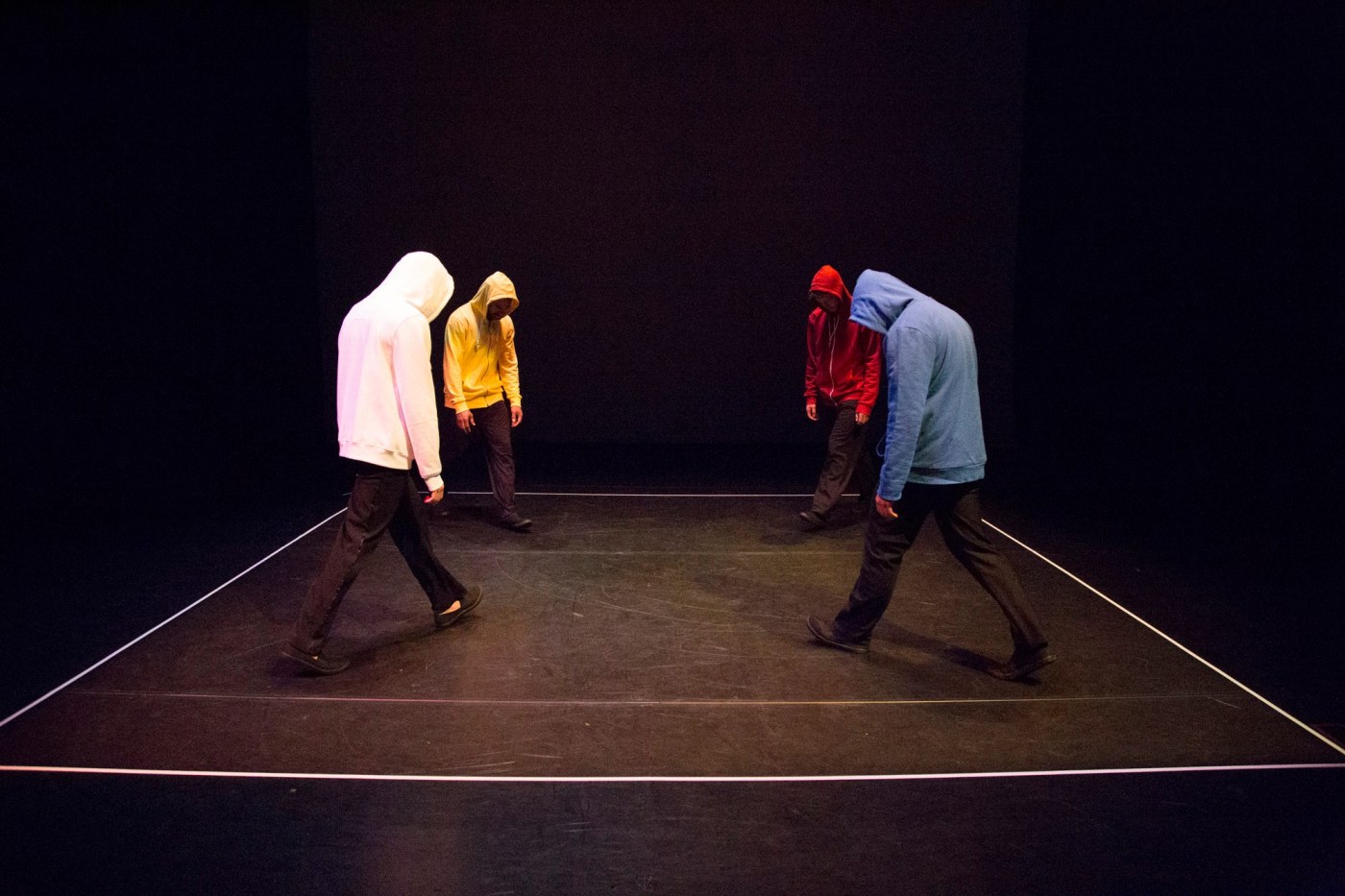
In 2026, the IFTR Samuel Beckett Working Group celebrates its thirtieth anniversary. To mark the occasion, co-convenors Céline Thobois-Gupta and James Little proposed a dialogue on what the SBWG means to its members. In this enterprise, they were joined by scholars Jonathan Bignell and Constantina Georgiadi.
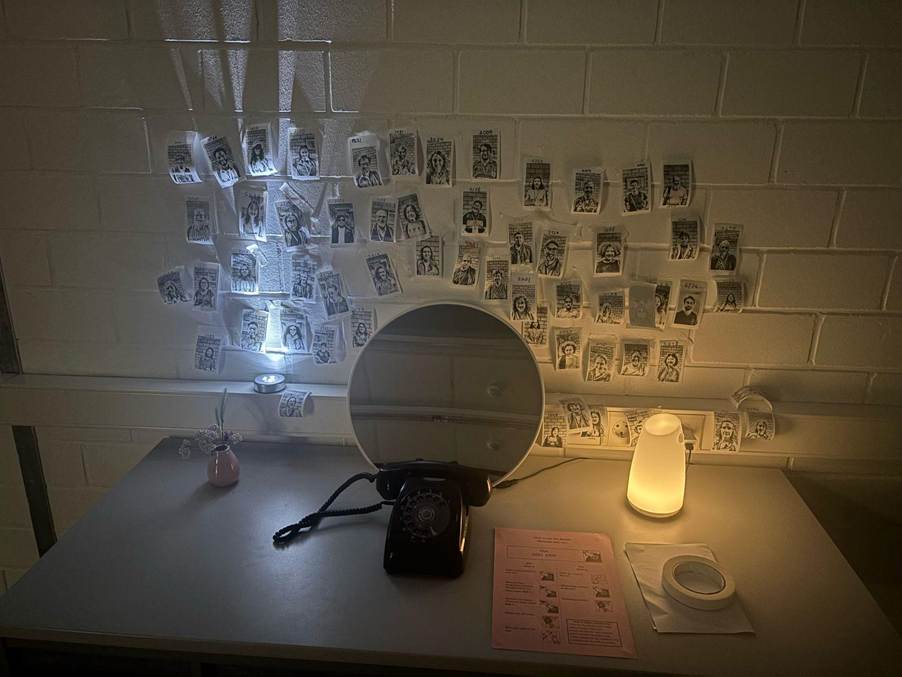
James Little: Frenchwoman, fire first.
Céline Thobois-Gupta: [Fixant l’écran.] Community. (Un temps. Elle lève la tête, regarde devant elle. Un temps. Elle pose à nouveau les mains sur le clavier et se met à taper). Support. (Un temps. Elle regarde à nouveau l’écran.) Rigour. (Un temps.) Diversity. (Sourire.) Multilingualism. (Levant les yeux. Expression joyeuse.) Your turn.
JL: [Two days later, inaudible].
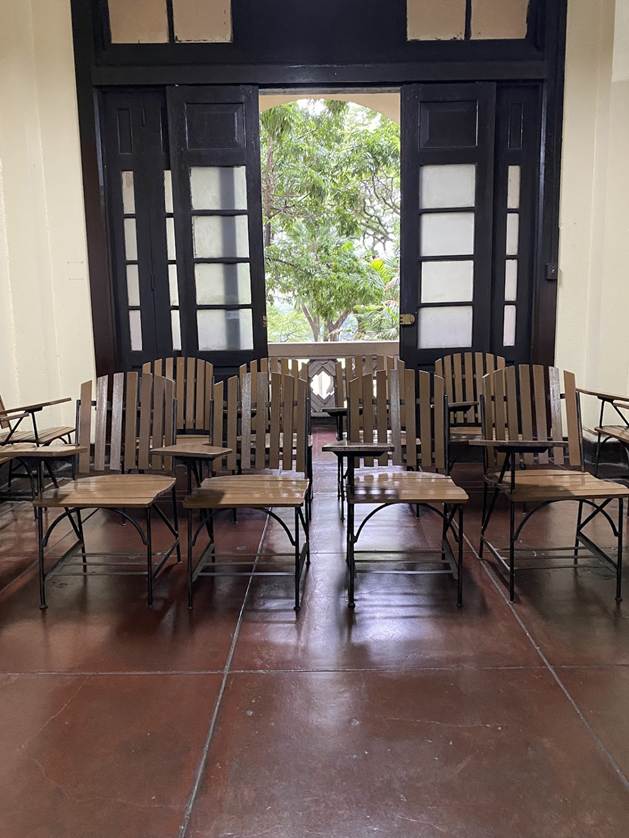
CTG: Actually, this playful start somehow echoes how we begin our week of collaborative work at the annual IFTR conference. During her convenorship, Trish McTighe initiated the integration of embodied activities to ground ourselves in the new spaces where we meet, and this has developed over the course of our co-convenorship into multilingual, collective readings of Beckett, to join all voices and start off conversations through personal, sensorial experiences. I have really good memories of our reading in Manila, in the room looking out to the lush campus of the university. It immediately bonded the group together, fostering a collaborative environment for our academic discussions throughout the week. That is when you became part of the group, James, I believe.
JL: That’s right: I had actually heard about the SBWG many times before I knew exactly how it worked. Only after attending my first IFTR conference in Manila (2024) did I realise what a dynamic and open group it was. When did ye first encounter the SBWG?
Constantina Georgiadi: In 2020–2021, during the pandemic.
CTG: I did not realise that we joined at the same time, Constantina. What about you, Jonathan?
Jonathan Bignell: My first SBWG was at the IFTR conference in Munich in 2010, when the theme was Beckett’s radio and television work. Linda Ben-Zvi – who founded the Group – convened, and members that year included my friend and colleague Anna McMullan (who had suggested I join the Group), as well as Trish McTighe, Mariko Hori Tanaka and Julie Campbell. Each meeting since then has combined the scholarly insight and sociable fellowship that I experienced there, and the pleasures of seeing old friends and encountering new people joining the field. I have enjoyed being part of SBWG sessions in Belgrade, Budapest, Cologne, Southampton and Stockholm, for example, and several online ones too.
JL: It was great to hear you present your research at the SBWG in Cologne last year, Jonathan, coming full circle in a sense. What would you say are the SBWG’s key characteristics?
CG: The feeling of acceptance and inclusion as a new member, even though my main area of expertise is not Beckett’s drama, is something I greatly appreciate. The quality of the people in the group, including both its organizers and participants, is exceptional. The scientific standards, organizational skills, and consistency of the group are also impressive. I particularly value the group’s regular activity with interim meetings throughout the year. Additionally, the intercultural nature, sensitivity, and respect towards group members are commendable. The interdisciplinary dialogue on key contemporary issues related to Beckett’s work is both engaging and enlightening. The organizers’ initiatives to publish the group’s research have been very important to me, and I am happy to now serve the community as an editor of the “tragic” issue of SBT/A (forthcoming in 2027).
JL: I would fully agree with you there, Constantina. What I particularly appreciate is the SBWG’s openness, its diversity (of thought, background and approach) and how it feeds off other activities within the global study of theatre and performance in the IFTR. As you said, Jonathan, something else the IFTR strongly supports is publication activity. How has the SBWG helped you develop your research?
JB: Usually I try out new project ideas at SBWG meetings, and about nine of my articles and chapters on Beckett and TV broadcasting were seeded or bore early fruit thanks to the rich soil of the SBWG where I presented and got helpful advice and encouragement.
CG: My systematic engagement with a new research field has provided me with the opportunity to explore new themes related to cutting-edge issues, such as the environment. This experience has enriched my knowledge with different methodologies and ways of working. Additionally, it has advanced my career by allowing me to author articles in edited volumes and participate in the group’s publications as a co-editor, providing me with an international scientific environment.
JL: These interactions with the broader scholarly community are crucial, as they also greatly enrich the study of Beckett’s work, I believe. How would ye like to see the SBWG develop in the future?
JB: The twin impulses towards both continuity across the years and also continual renewal are characteristic of the SBWG, and I hope it will still meet in-person at international conferences in the traditional way, as well as expanding its reach and impact by using online forums.
CG: I agree with Jonathan. Maintaining the group’s intercultural and global character, keeping developing interdisciplinary panels, expanding on connecting academic research with artistic creation, and continuing to explore experimental applications of Beckett’s work in cinema and technology would be valuable achievements.
CTG: I share your vision, Constantina: the SBWG has become truly international and intergenerational, fostering situated knowledges of Beckett’s oeuvre, generating new artistic adaptations of the texts, developing formal networks of support (via the mentorship programme), as well as informal ones: members stay connected beyond our two annual meetings, and they promote each other’s work in their own ecosystems. My hope is that we can sustain this collaborative environment, while developing our partnerships, notably with the Beckett Society. And of course, it would be wonderful to expand our connections with, and support of, artists creating work after Beckett, particularly in the Global South.
JL: Indeed, any future contributions that build on existing scholarship and bring the study of Beckett’s work beyond its current parameters would be most welcome.
The 2026 IFTR World Congress takes place between 6 and 10 July at the University of Melbourne, under the title ‘What Theatre Does’. For more detailed information about the SBWG and its activities all readers are encouraged to check out the IFTR webpage here.
Jonathan Bignell is Professor of Television and Film at the University of Reading. His work on Beckett and media includes the monograph Beckett on Screen: The Television Plays and Beckett’s Afterlives (co-edited with Pim Verhulst and Anna McMullan). He is a Trustee of the Beckett International Foundation.
Constantina Georgiadi is a Principal Researcher in Theatre Studies at the Institute for Mediterranean Studies at the Foundation for Research and Technology in Greece. Her main research interests are the history of nineteenth- and twentieth- century Modern Greek Theatre.
James Little is Assistant Professor in Drama, Theatre and Performance at the University of Cyprus. His publications include Samuel Beckett in Confinement, The Making of Samuel Beckett’s Not I / Pas moi, That Time / Cette fois and Footfalls / Pas and (as co-editor) Ireland: Interfaces and Dialogues.
Céline Thobois-Gupta is a PhD researcher and Teaching Fellow at the Department of Drama of Trinity College Dublin. She has co-edited the Anthropocene Issue of Journal of Beckett Studies (33.1) and Samuel Beckett and Ecology. She is currently contributing to the edition of the Tragic Issue of SBT/A (forthcoming 2027).
MASTHEAD: Samuel Beckett Summer School Trinity College


Leave a Reply